
Football
How Putin’s Spies Used Ronaldo’s YouTube Videos to Send Coded Messages to Moscow

Russian spies reportedly used YouTube videos of Cristiano Ronaldo to send coded messages back to Moscow.
This bizarre espionage tactic came to light after a seemingly ordinary couple in Germany were convicted of spying for Russia.
To their neighbors in Marburg, a town an hour north of Frankfurt, Andreas and Heidrun Anschlag appeared to be a typical married couple. They held Austrian passports—later discovered to be fake—and claimed to be of South American descent.
Andreas worked as a car engineer, while Heidrun was a stay-at-home mother, raising their daughter, who remained unaware of her parents’ true identities.
German journalist Mika Beuster recalled, “There was nothing that would distinguish them from any other family in the town, except for long phone calls in the garden during winter.” But behind this facade, the couple had been working as Russian spies for 23 years, earning £80,000 per year to gather intelligence on Western organizations, including the EU, NATO, and the United Nations.
The Anschlags operated using traditional espionage tactics—exchanging information via dead letter drops and collecting USB drives hidden in burrows. They also communicated with Russia’s Foreign Intelligence Service (SVR) through satellite and radio transmissions. However, with the rise of the internet, the couple adopted a new method: hiding messages in plain sight on YouTube.
In early 2011, the Anschlags created a YouTube account under the username @Aplenkuh1 (meaning Alpine Cow 1), while the SVR set up a separate account named @crsitanofootballer soon after. According to former BBC security correspondent Gordon Corera, their chosen platform for covert communication was none other than the comment section of Cristiano Ronaldo highlight videos.
In his book Russians Among Us, Corera explains: “The couple and the SVR created accounts a couple of months apart in early 2011, posting comments mainly on videos featuring Cristiano Ronaldo. They would write messages like, ‘It’s a very nice video and the song is also very good.’ The SVR account would respond with phrases such as, ‘He runs and plays like the devil.’” Beneath these seemingly innocent comments lay an encrypted messaging system.
Investigators discovered that specific punctuation marks within the comments could be translated into numerical codes, referencing a pre-agreed message. This technique was a modern evolution of the infamous “numbers stations”—mysterious public radio broadcasts that have long been used to send coded messages to spies worldwide.
German intelligence had been tracking the couple for some time, leading to a dramatic raid on their home in October 2011. Authorities reportedly stormed into their study while Heidrun was receiving an encrypted message through a radio transmitter. Shocked by the intrusion, she fell off her chair and accidentally disconnected the transmission.
The couple was convicted in July 2013—Andreas received a six-and-a-half-year prison sentence, while Heidrun was sentenced to five-and-a-half years. Their Dutch informant, a mole within the foreign ministry, was handed a 12-year sentence. However, by the end of 2015, both spies had been released and deported back to Russia.
This case highlights how espionage methods continue to evolve with technology. Using YouTube comments to exchange coded messages proves that intelligence agencies are constantly adapting to new digital landscapes.
While the Anschlags’ mission ultimately came to an end, their story serves as a chilling reminder that in the modern world, spies could be hiding in the most unexpected places—even in the comment section of a football video.
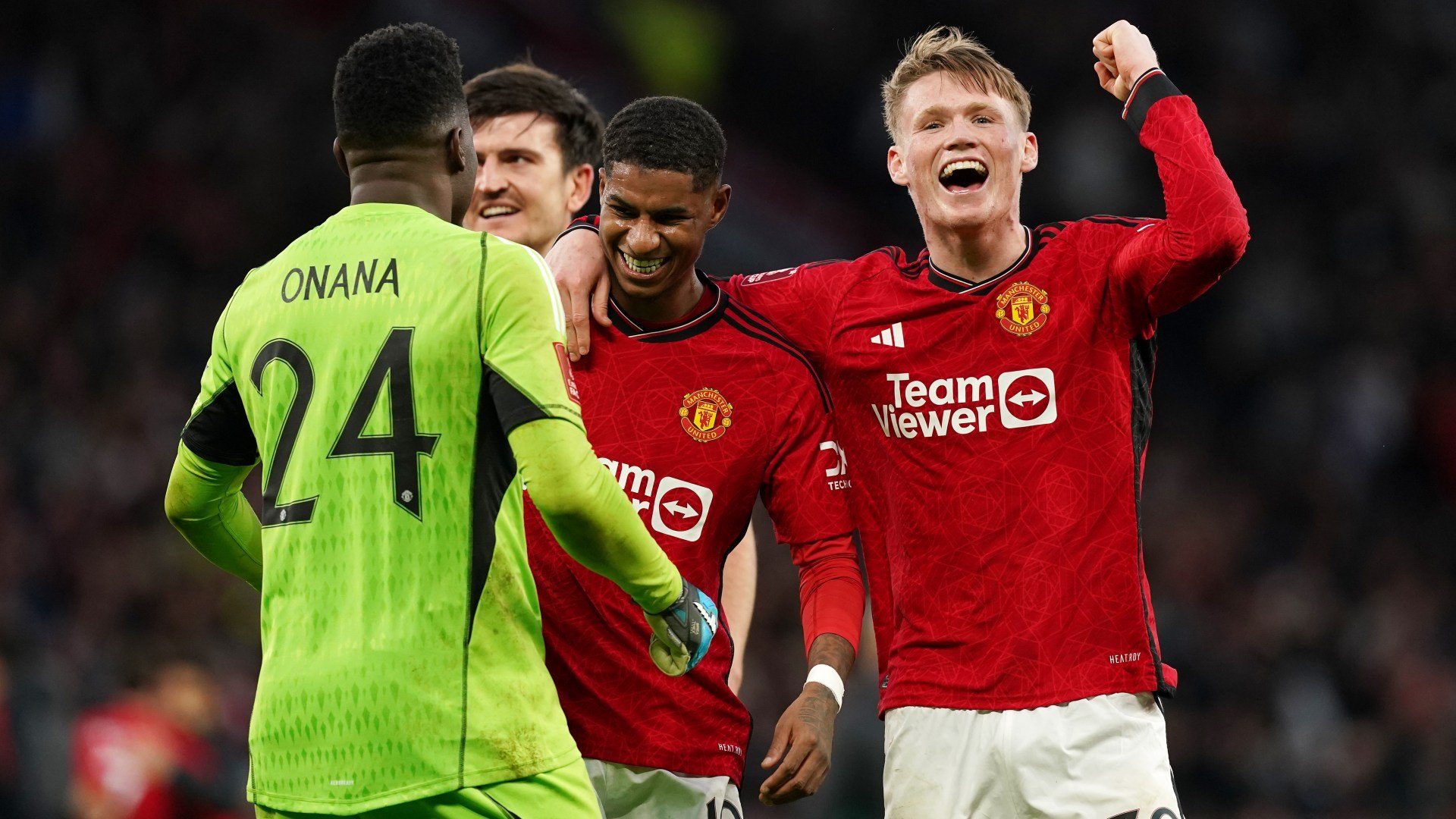
Andre Onana could remain in Turkey beyond his loan spell, with Trabzonspor keen to secure him on a permanent deal.
The 30-year-old moved to Trabzonspor after falling out of favour at Manchester United, who brought in Senne Lammens last summer. Since then, Lammens has established himself as the club’s first-choice keeper, paving the way for Onana’s temporary switch.
In Turkey, however, Onana has rediscovered his form and quickly become a key figure. He recently grabbed attention with a standout performance in the Turkish Cup, saving three consecutive penalties to help his side overcome Samsunspor and reach the semi-finals.
The moment sparked widespread reactions online, especially from United supporters recalling their earlier penalty shootout defeat to Grimsby Town, where Onana managed just one save.
Trabzonspor president Ertugrul Dogan has openly expressed the club’s desire to keep the goalkeeper. He indicated that while Onana has his own career plans, the club would be eager to make the move permanent if the circumstances align, leaving the final decision in the player’s hands.
Back in England, United are expected to consider selling Onana, particularly with Lammens now firmly established as their number one. The club will likely aim to recover a significant portion of the £47.5 million they paid to sign him from Inter Milan in 2023, with two years still remaining on his contract.
Beyond his cup heroics, Onana has been a consistent presence in the league, starting every match for Trabzonspor and playing a vital role in their push for the title. His performances have earned strong praise in Turkey, with the club currently sitting third in the table, just six points behind leaders Galatasaray.
Football
Man City place Arsenal ‘bottles’ for sale outside Etihad Stadium before 2025/26 Premier League decider
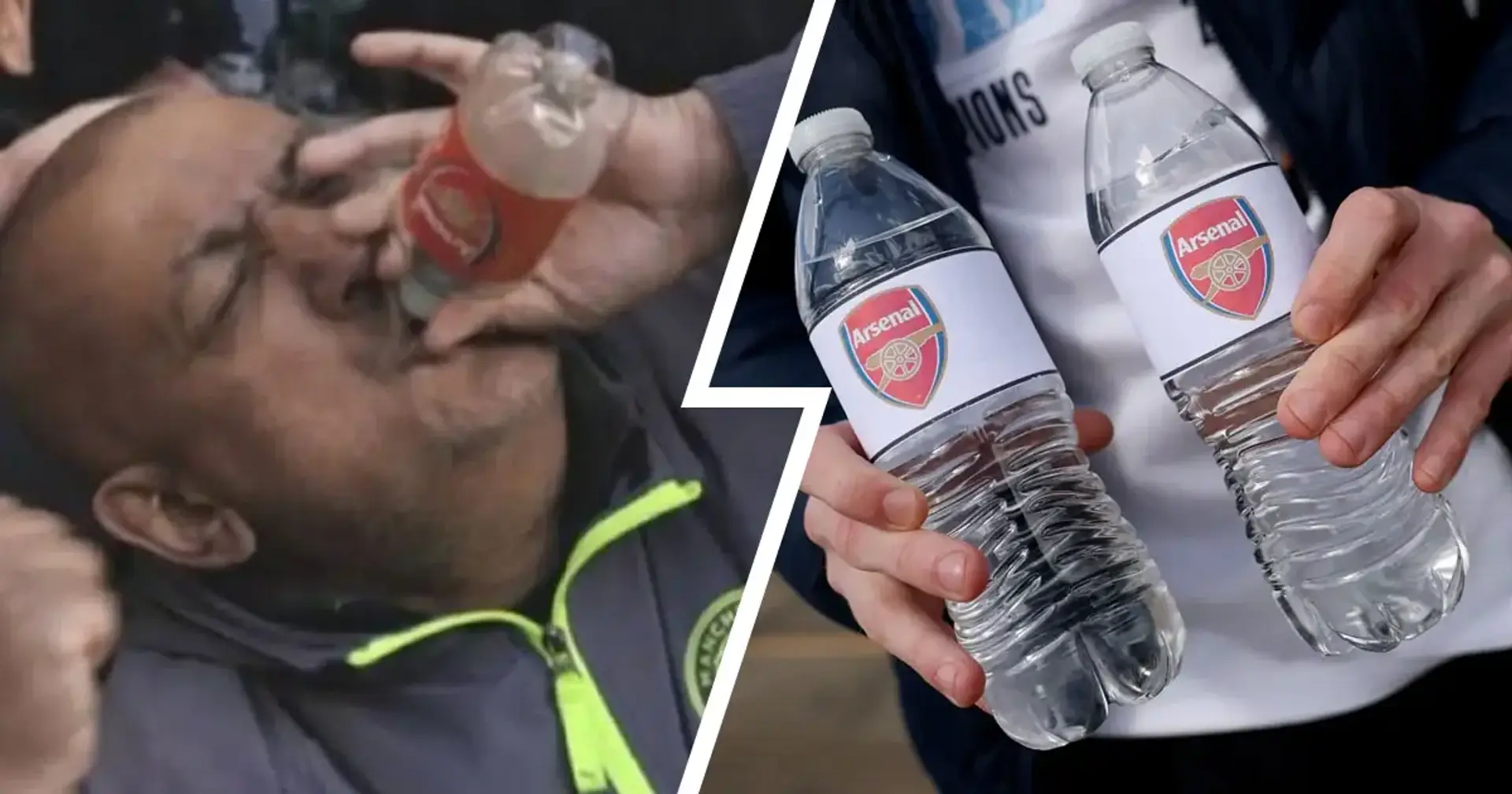
Manchester City appear to have kicked off the psychological battle ahead of their Premier League showdown with Arsenal.
In the build-up to the match, bottles branded with the Arsenal logo were reportedly being sold outside the stadium, priced cheaply and seemingly intended as a tongue-in-cheek way for home fans to mock the visiting supporters.

The stunt draws inspiration from a recent viral moment at Stamford Bridge, where a City fan was seen jokingly “drinking Arsenal tears” during their emphatic 3-0 win over Chelsea—a clip that quickly spread across social media.


With tensions already high given the importance of the fixture, the gesture adds another layer to the rivalry between the two sides. Arsenal, meanwhile, will be focused on responding where it matters most—on the pitch—as they aim to silence critics and deliver a strong result in what could be a defining game in the title race.
Football
Bruno Fernandes responds to Manchester United star’s dig at Chelsea flop Alejandro Garnacho
Alejandro Garnacho faced criticism from his former Manchester United teammates following Chelsea’s latest Premier League setback.
A first-half goal from Matheus Cunha secured a narrow but important win for United, strengthening the position of Michael Carrick’s side in the race for Champions League qualification. Chelsea, meanwhile, continue to struggle, with the defeat marking their fourth consecutive league loss without finding the net.
Pressure is mounting on head coach Liam Rosenior, who only took charge a few months ago after replacing Enzo Maresca. While the club has not publicly wavered in its support, questions are beginning to emerge over several players, including Garnacho, whose performances have failed to meet expectations since his £40 million move from Old Trafford.
Reports suggest Chelsea could be open to offers for the 21-year-old after a difficult start to life at Stamford Bridge. He had an early opportunity to impress against his former side after coming on for the injured Estevao, but once again struggled to make an impact, finding it hard to break through a United defence that was missing several first-choice centre-backs.

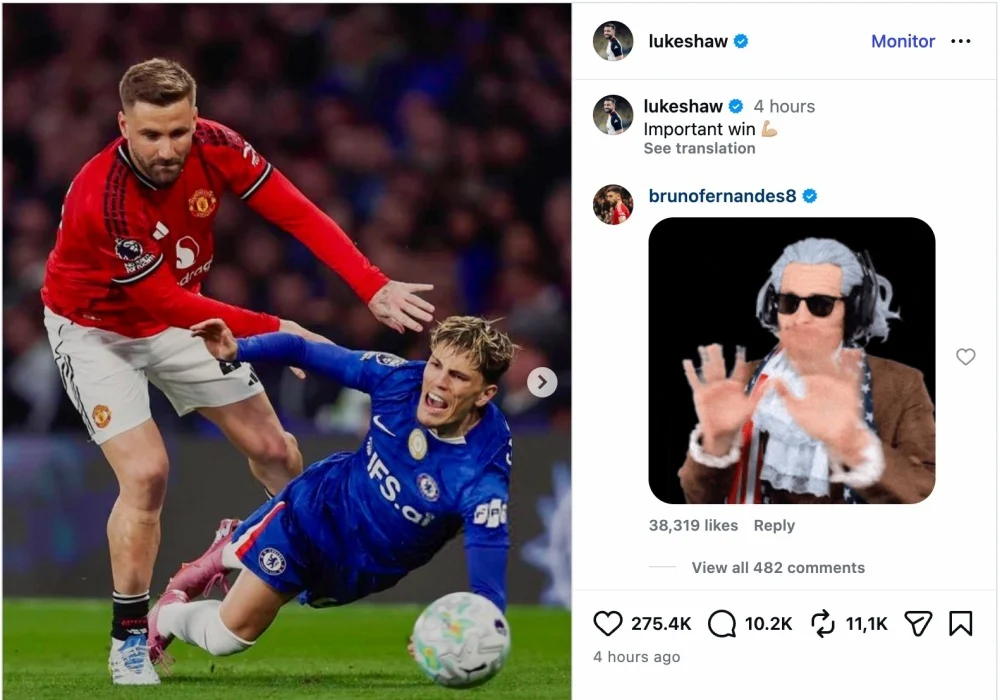
Garnacho also received a hostile reception from United supporters during the match, and the reaction appeared to carry over beyond the pitch. After the game, Luke Shaw shared an image on social media showing himself standing over Garnacho following a challenge. Bruno Fernandes responded with a playful but pointed comment, while former teammate Alex Telles also joined in with reactions.
Chelsea’s broader struggles are becoming increasingly concerning. They now sit four points behind Liverpool in the race for fifth place, despite having played an extra game. The current run—four straight league defeats without scoring—is their worst in nearly three decades, with an even longer drought not seen since 1912.

Across all competitions, the form is equally worrying, with six losses in their last seven matches and 16 goals conceded during that stretch. A significant portion of their recent goals have come in a single outing against Port Vale, highlighting their lack of consistency in front of goal.
After the match, Rosenior admitted uncertainty about what failing to qualify for the Champions League could mean for his future. He acknowledged the result was difficult to take, especially given that Chelsea created numerous chances but failed to convert them. He pointed out that United capitalised on a limited opportunity, while his side were unable to make their attacking pressure count.
Despite the frustration, Rosenior emphasized the need for continued effort and improvement, insisting that the team must find a way to turn their form around before the situation worsens further.
-
Football12 months ago
Antony scores another worldie with stunning free-kick vs ex-Man Utd team-mate
-
Football12 months ago
Guardiola refuses to shake hands with Palace star as Man City boss makes his feelings clear at the final whistle
-
NBA1 year ago
9 Years After ESPN Punishment, Radio Host Reveals Miami Heat’s Role in LeBron James’ Billboard Controversy
-
Football12 months ago
Lionel Messi involved in furious argument with referee after Inter Miami game
-

 Football11 months ago
Done deal: Details of Paul Pogba’s transfer to Monaco
-
Football12 months ago
Man Utd wonderkid dubbed ‘Next Yamal’ could snub Spain for England
-
Football12 months ago
REVEALRD: Why do Man Utd have (Red) as their shirt sponsor vs West Ham
-
Football12 months ago
Amorim spotted with new plaster on his knuckles after half-time vs Bilbao